What Problems Tree Stumps Cause If Left in Your Yard
Table of Contents
- Introduction
- How Tree Stumps Create Safety Hazards
- Why Tree Stumps Attract Pests and Insects
- How Leftover Stumps Affect Yard Use and Landscaping
- Unwanted Tree Regrowth and Root Issues
- Moisture, Rot, and Long-Term Property Concerns
- Environmental and Maintenance Considerations
- Book a Stump Grinding Service
- Frequently Asked Questions
Key Takeaways
- Tree stumps create safety and maintenance hazards — they pose tripping risks and interfere with lawn care equipment and regular yard maintenance.
- Leftover stumps attract pests and unwanted wildlife because rotting wood draws insects like termites and carpenter ants, as well as small animals seeking shelter.
- Stumps limit yard usability and landscaping potential — they occupy space, disrupt design plans, and can lead to unwanted regrowth that drains nutrients.
- Decaying stumps contribute to long-term property issues such as moisture retention, soil instability, and ongoing yard care complications if not removed.
Introduction
Tree stumps left in a yard can cause several practical and long-term issues, ranging from safety hazards to pest attraction and landscaping challenges. For homeowners, understanding the problems caused by tree stumps is important because these remnants often affect how a yard can be used, maintained, and planned for the future. Based on our experience working with residential properties in Rosenberg, TX, we regularly see how unresolved stumps quietly create complications that are not always obvious at first glance.
For homeowners considering solutions, stump removal services and tree stump removal are practical ways to restore safety and usability to outdoor spaces.
How Tree Stumps Create Safety Hazards
Tripping and Falling Risks
One of the most immediate problems caused by tree stumps is the risk of trips and falls. Stumps often sit low to the ground and may be hidden by grass, leaves, or debris. This can be especially concerning for children, older adults, or visitors unfamiliar with the yard layout. Even a stump only a few inches above ground level can pose a hazard during routine activities like walking, playing, or mowing.
Equipment and Maintenance Risks
Tree stumps can also interfere with lawn care equipment. Striking a stump with a mower or trimmer can damage equipment and increase the risk of injury. Over time, this makes routine yard maintenance more difficult and less predictable, making stump removal services a practical solution.
Why Tree Stumps Attract Pests and Insects
Insects Drawn to Decaying Wood
As a stump begins to decay, it becomes a natural attractant for insects. Termites, carpenter ants, beetles, and other wood-boring insects are often drawn to rotting stumps because they provide both shelter and a food source. Homeowners can learn how stump grinding can prevent pest infestation to protect surrounding trees and structures.
Wildlife Shelter Opportunities
In addition to insects, tree stumps can create shelter for small animals such as rodents or snakes. The hollowing wood and surrounding roots offer protection, particularly in quieter or shaded areas of a yard.
How Leftover Stumps Affect Yard Use and Landscaping
Limited Space and Design Challenges
Tree stumps can restrict how a yard is used or redesigned. Whether homeowners want to install new sod, build a patio, plant a garden, or add play equipment, stumps often stand in the way. Landscaping plans frequently require level ground and accessible soil, both of which are difficult to achieve with an existing stump and its root system. Consider consulting with tree stump removal experts to restore your yard’s full potential.
Visual Impact on Outdoor Spaces
Even when partially hidden, stumps can disrupt the overall appearance of a yard. Over time, weather exposure may cause the stump to crack, discolor, or sink unevenly, creating an unintentional focal point in the landscape.
Unwanted Tree Regrowth and Root Issues
Persistent Sprouting
Another common issue associated with tree stumps is regrowth. Some tree species continue to send up new shoots from the stump or surrounding roots long after the tree has been cut down. These shoots can drain nutrients from nearby plants and require repeated cutting to manage.
Underground Root Complications
The root system connected to a stump does not disappear immediately. Roots can remain active for years, sometimes interfering with underground utilities, irrigation systems, or nearby planting areas. In certain cases, decaying roots may also cause soil to shift or sink, leading to uneven ground.
Moisture, Rot, and Long-Term Property Concerns
Water Retention Problems
Tree stumps tend to retain moisture, especially after rain or irrigation. This damp environment accelerates decay and can create muddy or soft ground around the stump. Excess moisture in one area of the yard can affect drainage patterns and make certain spots difficult to maintain.
Gradual Deterioration Over Time
As a stump continues to rot, it may break apart unevenly. This process can take several years and often results in unpredictable changes to ground stability. Homeowners may not notice these changes until they begin affecting lawn quality or foot traffic.
Environmental and Maintenance Considerations
Ongoing Yard Care Challenges
Leaving a stump in place often means working around it indefinitely. This can complicate mowing, edging, fertilizing, and aeration routines. Over time, these extra adjustments can increase maintenance effort without improving yard usability.
Weighing Removal Options
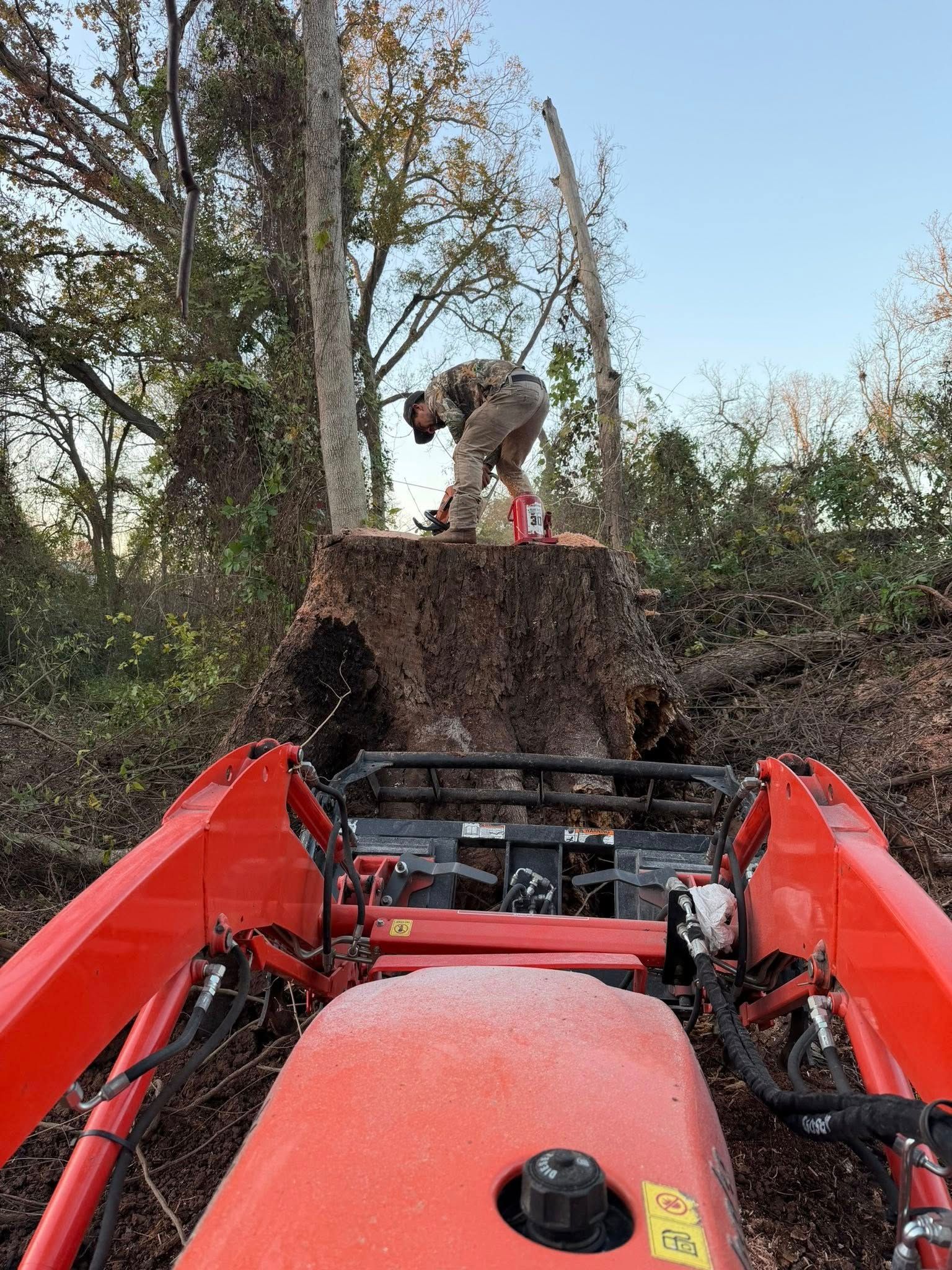
Tree stump removal and stump grinding are commonly considered when homeowners want to restore usable space or reduce long-term issues. Stump removal services typically focus on reducing surface obstacles while addressing below-ground concerns in a controlled way. Understanding how each option works helps homeowners choose an approach that aligns with their property goals and environmental considerations.
Book a Stump Grinding Service
For homeowners seeking clarity around stump grinding in Rosenberg, TX, we believe informed decisions start with understanding the condition of the stump, surrounding roots, and long-term yard plans. Stump grinding focuses on reducing the visible portion of the stump below ground level, helping restore usable space while minimizing disruption to the surrounding area.
At
Fulshear Tree Service, we approach stump-related concerns with a focus on safety, transparency, and practical outcomes. If you would like guidance about stump grinding or tree stump removal options, you can email us at
ocanaslawnservice@gmail.com, or call
(832) 720-3302 to discuss your situation and ask questions.
Frequently Asked Questions
What are the most common problems caused by tree stumps?
Common issues include tripping hazards, pest attraction, unwanted regrowth, landscaping limitations, and ongoing maintenance challenges.
Can insects from a tree stump spread to my home?
In some cases, insects attracted to decaying wood may move toward nearby structures, especially if conditions are favorable.
How long does a tree stump take to decay naturally?
Natural decay can take several years, depending on tree species, climate, and moisture levels.
Is stump grinding different from full tree stump removal?
Yes. Stump grinding reduces the stump below ground level, while full removal involves extracting the stump and root system.
Will a stump eventually stop producing new shoots?
Some stumps stop sprouting over time, but others can continue sending up shoots for years without intervention.
Does leaving a stump affect future landscaping projects?
Yes. Stumps and roots often interfere with grading, planting, and construction plans.
Is stump removal always necessary?
Not always. The decision depends on safety concerns, yard use, and long-term property goals.
Related Posts